
Prioridad a la detección del cáncer de piel
El cáncer de piel es la forma más común de cáncer en los EE.UU., y la detección temprana hace una gran diferencia. Nuestros dermatólogos colegiados están especializados en la detección, el diagnóstico y el tratamiento del cáncer de piel, disponibles en todo el país a través de teledermatología o en nuestras clínicas de California.

Comprender el cáncer de piel
El cáncer de piel se desarrolla cuando las células de la piel empiezan a crecer de forma incontrolada, la mayoría de las veces debido a la exposición a la luz ultravioleta (UV) del sol o al bronceado en interiores. Los tipos más comunes son:
- Carcinoma de células basales (CCB): es la forma más frecuente y suele aparecer como una protuberancia de color carne o una mancha rosada en zonas expuestas al sol.
- Carcinoma de células escamosas (CCE): suele ser un bulto rojo y firme o una mancha escamosa en la piel expuesta al sol, que también puede extenderse si no se trata.
- Melanoma: la forma más grave de cáncer de piel; comienza en las células productoras de pigmento y puede extenderse por todo el cuerpo.
Aunque cualquiera puede desarrollar cáncer de piel, los riesgos aumentan con antecedentes de quemaduras solares, bronceado, piel clara, muchos lunares o antecedentes familiares de cáncer de piel.
El cáncer de piel podría parecer:
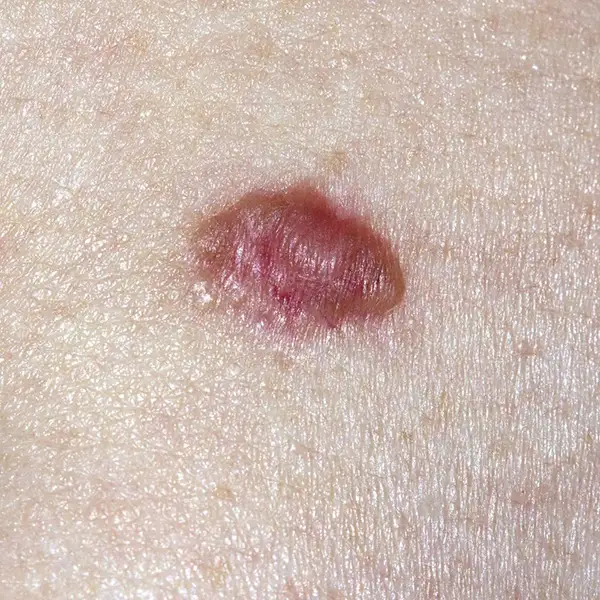
Carcinoma de células basales
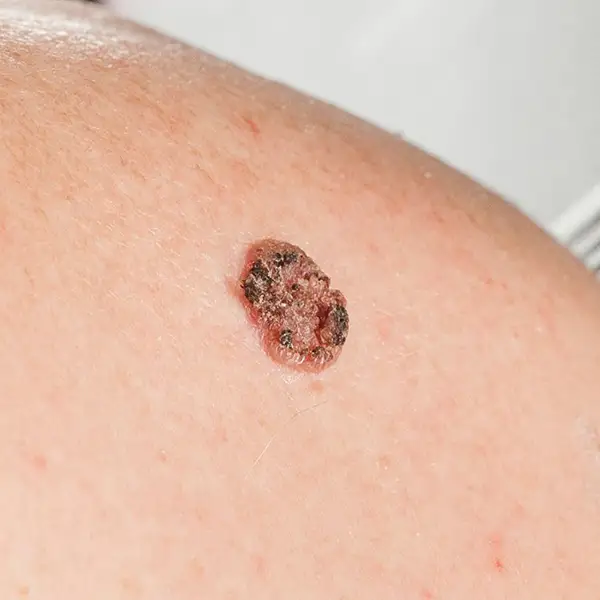
Carcinoma de células escamosas
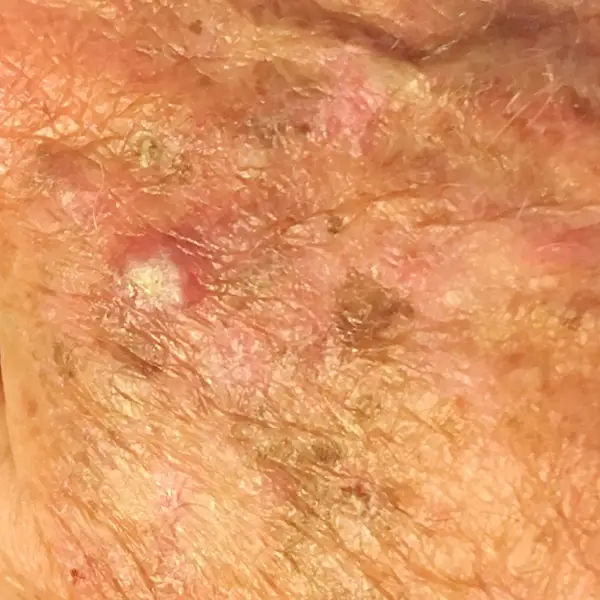
Queratosis actínica
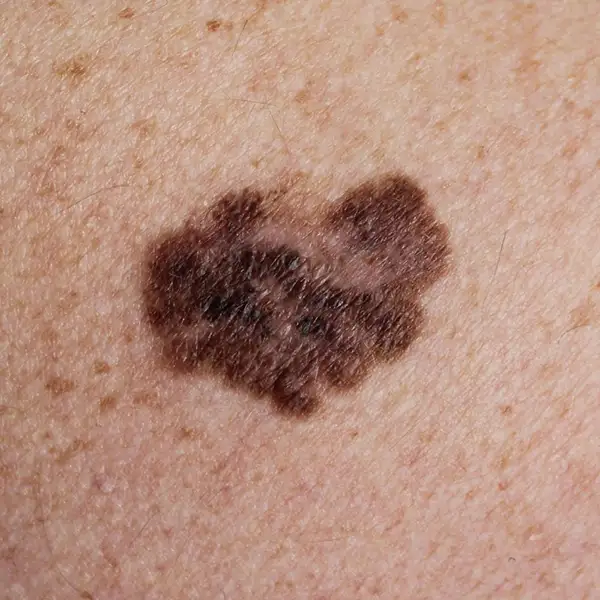
Melanoma
Consejos de autocuidado y prevención del cáncer de piel

Crema y protección solar

Evitar el bronceado en interiores

Realizarse autoexámenes

Pruebas anuales de detección del cáncer de piel
Atención integral del cáncer de piel, desde el diagnóstico hasta el tratamiento
En DirectDerm, Nuestros dermatólogos ofrecen planes de tratamiento personalizados para todos los tipos de cáncer de piel. Según el tipo y el estadio, los tratamientos pueden incluir escisión quirúrgica, cirugía micrográfica de Mohs, terapias tópicas, radioterapia o terapias sistémicas. Una detección precoz significa mejores resultados y tratamientos menos invasivos.
Detección y tratamiento del cáncer de piel
No tiene que esperar para hacerse una revisión. Programe una visita teledermatológica desde casa para una evaluación inicial de la piel o visite una de nuestras clínicas de California para someterse en persona a una prueba de detección del cáncer de piel. Actuar pronto es clave.


Teledermatología con derivación a dermatólogos locales
Visitas en línea seguras desde cualquier lugar

TESTIMONIO DEL PACIENTE
El Dr. Wong me ha demostrado que tiene una gran preocupación por sus pacientes. Si necesita atención dermatológica, DirectDerm es tan bueno como se pone.
Preguntas frecuentes sobre el cáncer de piel
¿Cuáles son los signos del cáncer de piel?
Busque nuevos crecimientos, llagas que no cicatricen, cambios en el tamaño, la forma o el color de un lunar, o manchas que sangren o piquen.
¿Quién corre peligro?
Cualquiera puede padecer cáncer de piel, pero el mayor riesgo lo tienen las personas con piel clara, muchos lunares, antecedentes de quemaduras solares o bronceado en interiores, o inmunodepresión.
¿Qué importancia tiene la detección precoz?
Mucho. La mayoría de los cánceres de piel son muy tratables si se detectan a tiempo. El melanoma, en particular, tiene mejores resultados cuando se detecta antes de que se extienda.
¿Puedo someterme a un cribado de cáncer de piel a través de la teledermatología?
La teledermatología es ideal si ha observado una mancha o un crecimiento específico que desea evaluar. Nuestros dermatólogos certificados pueden revisar las fotos, proporcionar orientación y recomendar los pasos a seguir. Sin embargo, un examen completo de la piel del cuerpo o de detección requiere una visita en persona en una de nuestras clínicas de dermatología del norte o centro de California. Si se necesita una visita en persona después de una visita virtual y usted no está cerca de una de nuestras clínicas, podemos referirlo a un dermatólogo de confianza cerca de usted.
¿Existen clínicas dermatológicas con revisiones de cáncer de piel en California?
Absolutamente. DirectoDerm atiende a pacientes del norte y el centro de California tanto con visitas en línea como con revisiones en persona.
 Español
  English