
October is Eczema Awareness Month, and it’s a good time to take a closer look at this skin condition that affects far more people than most realize. According to the National Eczema Association, about 31.6 million people in the U.S., roughly 1 in 10, have some form of eczema. That includes an estimated 9.6 million children with atopic dermatitis.
Eczema is more than dry skin. The itch can keep you up at night, distract you at work or school, and wear on your confidence. The good news: with the right diagnosis and a personalized plan, most people can calm flares and keep their skin comfortable. Here’s what to know, and how DirectDerm’s board-certified dermatologists can help, whether you’d like to be seen online or in person.
What is eczema?
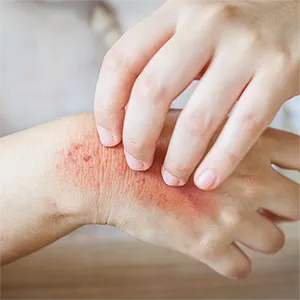 Eczema is a common, non-contagious condition that makes skin dry, itchy, and inflamed. It often starts in childhood but can begin at any age, and it tends to come and go in flares. It develops when the skin’s protective barrier isn’t working as it should, with genetics, the immune system, and the environment all playing a part.
Atopic dermatitis is the most common type. Others include contact dermatitis (triggered by irritants or allergens), dyshidrotic eczema (small, itchy blisters on the hands or feet), nummular eczema (coin-shaped patches), and seborrheic dermatitis (flaky patches on the scalp or face). The NEA has a helpful overview of the different types of eczema.
Common signs of eczema
Eczema looks and feels different from person to person, but common signs include:
- Intense itching, often worse at night
- Dry, rough, or scaly patches
- Redness on lighter skin; brown, purple, or gray patches on darker skin
- Oozing, crusting, or skin thickened from repeated scratching
Because eczema can look different on different skin tones, it’s sometimes missed or mistaken for another condition. Our dermatologists can confirm the diagnosis and rule out look-alikes such as psoriasis, fungal infections, or allergic reactions.
What triggers eczema flares?
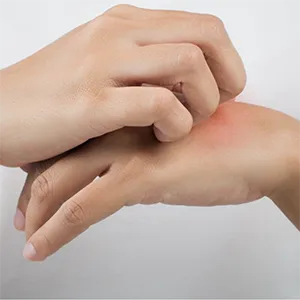 Triggers vary, but these are some of the most common:
- Irritants: fragranced soaps, detergents, and lotions
- Weather: dry or cold air, heat, sweat, and hot showers
- Fabrics: wool and rough or synthetic materials
- Allergens and stress: dust mites, pollen, pet dander, and emotional stress
Fall and winter can be especially tough. Cooler, drier air pulls moisture from the skin, and longer, hotter showers make it worse. Keeping a simple log of when flares happen can help you and your dermatologist spot patterns.
Everyday tips to calm and prevent flares
Good daily skin care is the foundation of eczema control. The American Academy of Dermatology recommends habits like these:
- Bathe in warm, not hot, water and keep baths or showers short.
- Use a mild, fragrance-free cleanser, and skip bubble baths.
- Gently pat skin partly dry instead of rubbing.
- Apply a thick, fragrance-free cream or ointment right away, while skin is still damp.
- Wear soft, breathable fabrics like cotton, and wash clothes with a fragrance-free detergent.
- Keep nails short and try not to scratch, since scratching can break the skin and lead to infection.
If you’ve been doing all of this and your skin still isn’t improving, that’s a sign it’s time for expert help.
When to see a dermatologist for eczema
 Make an appointment with a dermatologist if:
- Itching disrupts your sleep, school, or work
- Over-the-counter creams and moisturizers aren’t helping
- The rash is spreading or covers large areas of your body
- Flares are frequent, or a baby or young child is affected
Seek care promptly if you notice signs of infection, such as pain, pus, yellow crusting, or fever.
For children, our pediatric dermatology specialists care for infants, kids, and teens with eczema.
How DirectDerm dermatologists treat eczema
There’s no one-size-fits-all eczema treatment. Our dermatólogos colegiados start by confirming the diagnosis, then help identify your personal triggers and build a skin-care plan to calm current flares and prevent new ones. Depending on your needs, treatment may include:
- Prescription topical treatments to reduce inflammation and itch
- Oral medications for more widespread or stubborn eczema
- Injectable medications (biologics) for moderate to severe atopic dermatitis
- XTRAC® laser therapy, a targeted, FDA-cleared light treatment available at select DirectDerm clinics
Two ways to get eczema care: online or in person
At DirectDerm, you choose how you’re seen. Many patients use a mix of both.
Teledermatology: expert eczema care from home
With DirectDerm teledermatología, you describe your symptoms and upload photos of your skin from your phone or computer. A board-certified dermatologist reviews your case and sends a diagnosis, treatment plan, and any prescriptions, usually within 24 to 48 hours. There’s no waiting room and no referral needed.
Online visits are a great fit for busy parents and professionals, people in rural areas, and anyone who’d rather not wait weeks for an appointment. DirectDerm teledermatology is available nationwide. If you need to be seen in person, we’ll help you schedule with a dermatologist near you.
In-person care at our California dermatology clinics
Some eczema care is best done face to face, such as a full-body skin exam, patch testing referrals, or in-office procedures like laser therapy. DirectDerm offers full-service dermatology at our clinics in Fresno, Sacramento, Salinas, Manteca, Merced, and Los Baños.
DirectDerm accepts many major health plans, including Medicare and also offers a self-pay option.
Take the first step toward calmer skin
Don’t let itchy, inflamed skin run your days and nights. Whether you start online or visit one of our clinics, DirectDerm makes expert eczema care simple.
This article is for general education only and is not a substitute for medical advice.
 Español
 English